

Best Home Sauna Kits for 2026: Find the Right Fit
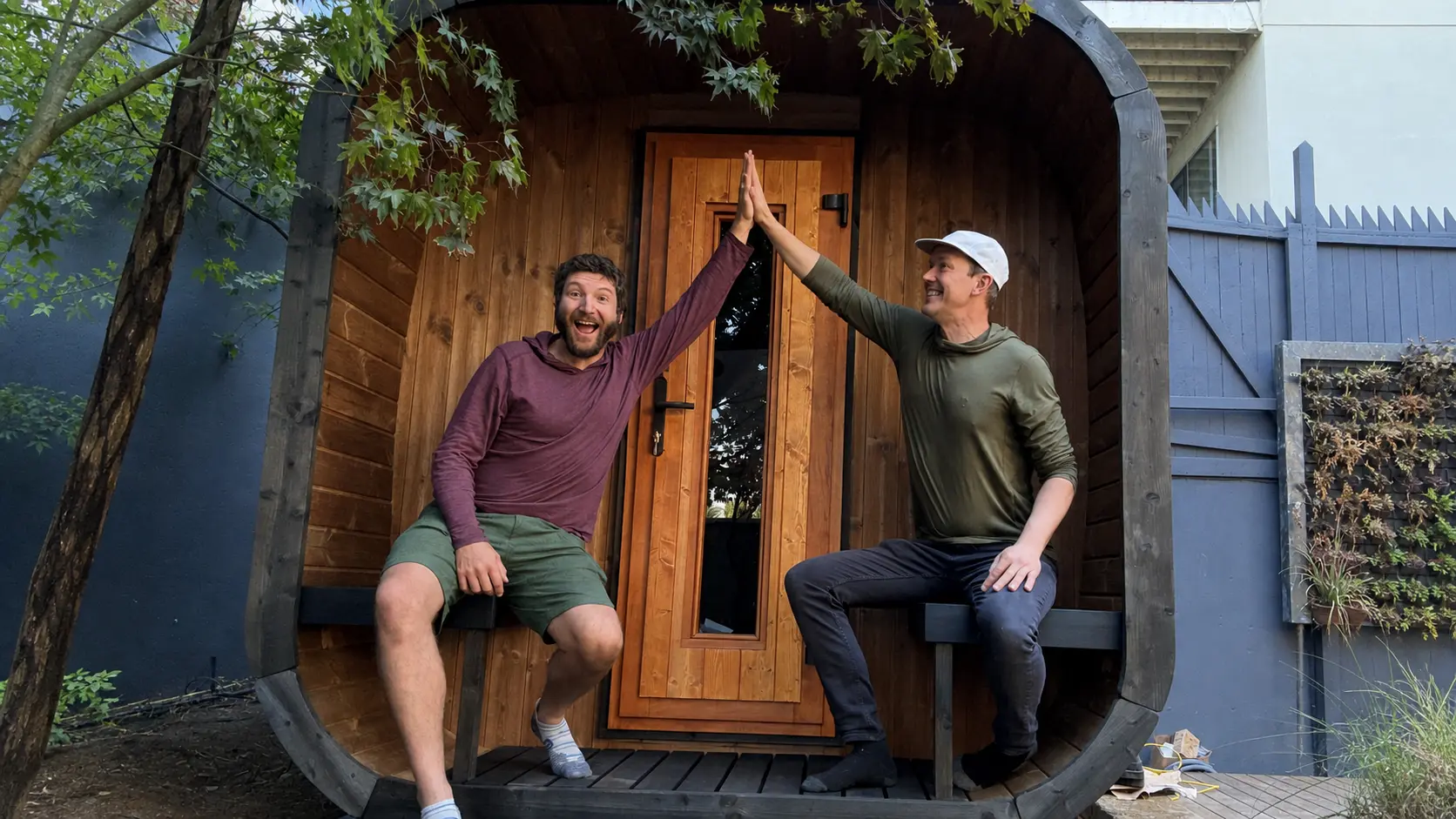
Ben Frizzell and Ben Burger after building the first SaunaLife CL12G sent to America.
When a new model comes along, we try to build it ourselves so we know it firsthand. We want to know how the parts fit, how the benches feel, and where you’ll want an extra pair of hands. You get that experience when you ask us for help planning your sauna.
If your best friend was a sauna expert.
You get a sauna that lasts and gets used.
Comfortable benches. Heat you enjoy. A room that earns its place in your home, year after year.
Picture where you will sit, who will join you, and how easy it will be to take a sauna on an ordinary evening. Those choices tell you more than a headcount or a photograph.
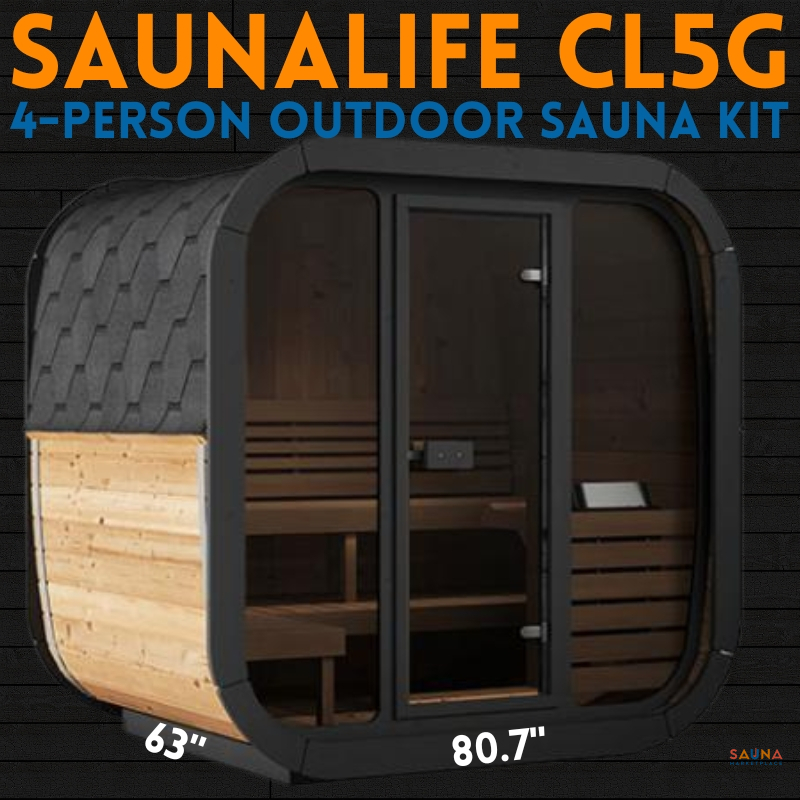
Our go-to outdoor kit is the SaunaLife CL5G. It brings comfortable seating, a glass front, thermally modified spruce, and proper water management together. Compare Leil Celto S and M for a shallow footprint, Round Cube Single for facing benches, and Auroom if the sauna is going indoors.
These are traditional saunas designed for a stone heater, with water on the hot stones for steam. The outdoor rooms and heater equipment are separate selections. We sell the saunas in this guide, and our builds, home saunas, and manufacturer visits are the experience behind the advice.
Which one sounds like your sauna?
- A backyard sauna for regular use
- SaunaLife CL5G
A glass front, contoured seating, and the weather protection we want in an outdoor kit.
- A compact patio or shallow space
- Leil Celto S or M
Both are 56 inches deep. Choose the width that gives you enough room across the bench.
- Friends facing each other
- Leil Round Cube Single
Opposing tiered benches, a central aisle, and a broad view through the glass front.
- Corner seating and room to stretch out
- Sauna Squares by Thermory
An L-shaped bench arrangement and thermally modified aspen, with years of home use behind our advice.
- You like the barrel shape
- SaunaLife EE6G
Raised back-wall seating and a flat floor make the room inside worth a closer look.
- A sauna inside your home
- Auroom
Choose a compact room, a reclining bench, or a wood-front layout for your indoor space.
Start with how you want to sit.
Will most sessions be just you, the two of you, or a group? Do you like sitting upright, putting your feet up, or lying down? A four-person label cannot answer that.
Check the upper-bench length and depth, the step into the room, and the space around the heater. Then choose a spot that makes the sauna easy to use. Your route from the house, somewhere to cool off, and a dry place for a towel all belong in the plan.
SaunaLife CL5G: an outdoor sauna to settle into
The CL5G is an easy one to put on your shortlist if you want a glass-front sauna with contoured benches and backrests. It is sold as a four-person room; compare the bench dimensions with how you want to sit or recline.
Its thermally modified spruce shell, roof underlay and shingles, drip edges, floor drains, and vents are practical reasons to choose it for years of use. The glass gets your attention. Those construction details look after the room around it.
For a smaller space, compare the CL3G and CL4G. For facing or corner seating, look at Round Cube or Thermory Square below.
See the work before it is your project. Our CL5G build shows two people, hand tools, and the parts that take patience.
Leil Celto: a shallow footprint with room across the bench
If depth is the limit in your yard, compare Celto S and Celto M. Both are 56 inches deep and 84 inches high. The choice is how much width you can give the sauna.
Celto S: a compact room for two
The S is 65 inches wide, with a 59-by-50-inch interior footprint and a 24-inch-deep upper aspen bench. It is a compact seated layout. Look at the drawing if stretching out is high on your list.
Celto M: take the extra bench width if it fits
The M adds 16 inches of exterior width without adding depth. Its 81-inch width gives you a 74-by-50-inch interior footprint; Leil rates it for three people. If your space allows it, that extra room across the bench is the reason to choose M.


Both use 2.4-inch natural spruce cross-laminated panels, bronze tempered glass, and aspen seating. The floor, EPDM roof membrane, four vents, door, benches, and base frame are included.
Plan for the exterior finish and heater. Celto’s spruce is not thermally modified. Apply the required clear UV-protective weatherproof exterior finish after assembly. Heater equipment is selected separately; the offered packages include the purpose-built Celto stand.
See Celto S and its drawing → Compare Celto M →
Leil Round Cube Single: a sauna to share
If you picture people facing each other between rounds of steam, look at Round Cube Single. Tiered benches face across a central aisle, and the panoramic glass front opens the room to the view outside.
The Single 2.4 and 2.6 are about 121 inches wide, with exterior depths of about 94 and 102 inches. The deeper model gives you longer upper benches. Use the drawings and our 360-degree photographs on the product page to compare the room you will actually share.
The shell is thermally modified timber. Heater equipment, unloading, assembly, and exterior treatment belong in the complete project budget. Leil’s current manual ties its material and production warranty to manufacturer assembly; written U.S. kit coverage remains unconfirmed. Settle that detail with us before ordering.

Compare Round Cube sizes and complete heater packages →
Thermory Square: sit around the corner, or stretch out
The Thermory Square is worth a close look if the bench arrangement is your deciding factor. Its L-shaped layout suits conversation and gives two people a way to stretch out. The room is built from thermally modified aspen.
Ben Frizzell still owns the first Thermory Square sent to North America, near Bend, Oregon. It has been our heater test bench ever since.
Different heaters, ventilation arrangements, and bench layouts: those are things we have lived with at home. You get the benefit of that experience when we help plan yours.

SaunaLife EE6G: look at the room inside the curve
If a barrel is the shape you want in the yard, compare the EE6G. Upper benches sit against a flat back wall and face the glass front. A floor kit gives you a flat surface to stand on.
That seating arrangement is the reason to look closer. Compare where you will sit, where your feet will go, and how easily you can move through the room. Its thermally modified spruce shell and thermo-aspen benches give you the outdoor timber construction we want to see.
Auroom: make the sauna part of your home
A basement, bathroom, or spare room can put the sauna close to everyday life. Start with an Auroom designed for indoor installation, then choose the seating you want:
- Cala Glass Mini for a compact room.
- Baia if its sculpted reclining bench is how you want to relax.
- Libera Wood for a wood-front room with upper and lower benches and an included floor kit.
Allow space to assemble the panels as well as space for the finished sauna. The surrounding room, ventilation, door swing, and heater clearances need to work together. Our Libera build gives you a look at the job.
What makes an outdoor sauna last?
Your sauna has to handle heat and steam inside, weather outside, and repeated wetting and drying. Five details do the work:
- A proper roof keeps weather out. Shingles or a membrane protect the timber. Correct overlaps and sealed details shed rain and snowmelt away from the room.
- Drip edges carry runoff clear. They help stop water tracking under the roof edge and repeatedly soaking the ends of the boards.
- Drains give water a way out. Floor water needs an exit. Clear drains and a foundation that sheds water keep the bottom of the sauna out of standing moisture.
- Vents help it dry. They support fresh air during use and let moisture escape afterward. Drying between sessions is part of looking after the wood.
- Thermally modified wood moves less. Heat-and-steam treatment reduces moisture uptake, swelling, and shrinking. It also improves resistance to decay.
Our rule for single-layer outdoor kits
We will not sell an outdoor sauna kit made from a single layer of solid wood that has not been thermally modified. This applies to solid-board or stave construction, where the same boards face the weather and the hot room.
Ordinary wood swells as it takes up moisture and shrinks as it dries. Repeated movement can open joints and change the door fit. Thermal modification reduces that movement and improves decay resistance, giving this construction a better basis for a long life.
Celto is a different wall system: cross-laminated spruce panels made from bonded layers, with an EPDM roof and required protective exterior finish. Its natural spruce is not thermally modified.
A sound roof, clear drains, working vents, and the manufacturer’s wood-care routine still matter. Those details protect the sauna through the years you own it.
What is the real total, and what will the build take?
Put the whole project on the page before comparing prices:
- The sauna and complete heater package
- Check the room’s included-parts list, then the heater, stones, controls, power unit, guard, and any required stand.
- Delivery and unloading
- Curbside delivery leaves the move to the final spot with you. Check the crate, unloading method, gate, and access route.
- The base, assembly, and exterior finish
- Include a suitable foundation, help for the heavy parts, and the roof and wood finishing specified for the model.
- Electrical work and tax
- Have an electrician work from the exact heater and control manuals and applicable local requirements.
Glass, timber construction, insulation, ceiling height, and clearances affect heater selection. Tell us how you like your sauna to feel, then use the equipment matched to that room. A bigger heater is not automatically the right heater.
The product pages show current prices and package options. The build videos show the work. Bring both into the decision before you set a date with an installer.
You can ask about the awkward parts.
Getting the crate off the truck. Fitting the benches. Working out what the electrician needs. Those are questions to settle while the project is still easy to change.
We’ve taken the deliveries, hired the electricians, built the saunas, and lived with them for years. Talk it through with a Ben before ordering. Our team stays available through the build and afterward.
Get answers from experience.
We know our manufacturers by first name. We walked factory floors, sat in their saunas, and asked the questions your project might bring up.
Our September 2026 visits to Leil and Thermory in Estonia are part of that work. When a detail needs checking, we know where to take the question.

“Ben has been fantastic and has continued to be available to us to answer any questions and provide information even post sale.”
Questions before you order
Which home sauna kit would you recommend?
For an outdoor sauna, the SaunaLife CL5G is our go-to all-round choice. Compare Leil Celto S and M when a shallow footprint matters, Round Cube Single for facing benches and a panoramic front, and Thermory Square for L-shaped seating. For an indoor room, compare Auroom Cala Glass Mini, Baia, and Libera.
How many people will fit comfortably?
Start with the people who will use it most and whether they want to sit or recline. Two people lying down need a different layout from four sitting up. Check the actual upper-bench length and depth, the step into the room, and the space around the heater. A capacity label is only part of the answer.
What is the difference between Leil Celto S and M?
Celto S is rated for two and measures 65 inches wide by 56 inches deep by 84 inches high. Celto M is rated for three and adds 16 inches of width at the same depth and height. Both use natural spruce cross-laminated panels, need an exterior protective finish after assembly, and have separately selected heater equipment.
Why require thermally modified wood for single-layer outdoor kits?
A single layer of boards or staves faces outdoor weather and indoor sauna conditions. Repeated swelling and shrinking can affect the joints and door fit. Thermal modification reduces moisture uptake and movement and improves decay resistance, so we require it for that construction. Celto uses a different system: cross-laminated spruce panels with an EPDM roof and a required protective exterior finish.
Is the heater included in the kit price?
The outdoor sauna rooms in this guide have separately selected heater equipment. Check the complete package for the heater, stones, controls, power unit, guard, and any required stand. Which components you need depends on the heater you choose.
What should I budget for beyond the sauna?
Include the complete heater package, freight and unloading, foundation, assembly, required exterior finish, electrical installation, and tax. Put those items together before comparing totals. The linked product pages show current room and package prices.
Can I build the kit myself?
Many kits are designed for self-assembly. Watch the matching build video, read the exact manual, and plan people and equipment for the heavy parts. Allow time for the roof and exterior finish. A licensed electrician handles the heater installation to its manuals and local requirements.
How do I help an outdoor sauna last?
Keep the roof covering sound, drip edges and drains clear, and ventilation working so the sauna can dry between sessions. Maintain the exterior finish specified for the model. Thermally modified wood still needs the manufacturer's care routine; the roof, drainage, ventilation, and wood all work together.
The rabbit hole ends here.
Bring a photo of the spot, your available width and depth, your ZIP code, and how many people will use the sauna. Tell us whether you want to sit, stretch out, or share it with friends.
We will work through the room, heater, delivery, and installation with you, so you can move ahead with a plan.
A free 30-minute video call with Ben Burger or Ben Frizzell.
 Prebuilt
 Sauna Brushes
 Vents
Vents