

Sauna Kits: Outdoor, Barrel & Indoor
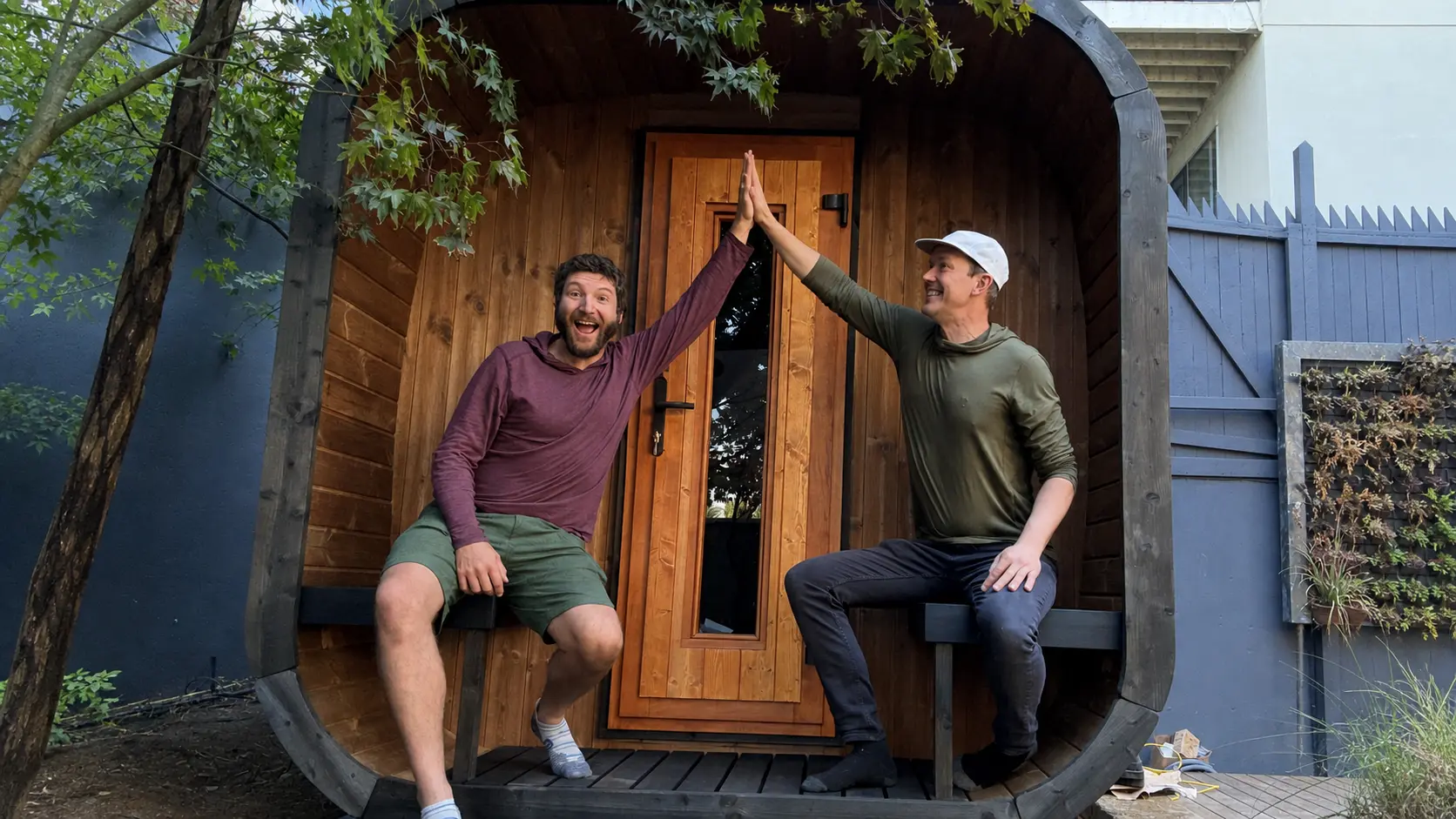
Is a sauna kit right for you? If you do not want to frame a sauna from raw lumber, and a finished prebuilt starting in the mid-teens is out of budget, a kit is the sweet spot. A sauna kit ships as labeled, pre-cut parts that you assemble on site. You handle the base and the electrical hookup. The walls, roof, door, and benches show up ready to build.
There are three ways to get a sauna. Build one from raw lumber and your own framing, which is a real construction project. Buy a prebuilt that arrives finished, with compact models beginning in the mid-teens and larger cabins climbing well past $20,000. Or order a kit, which lands in the middle: the engineering and cutting are done, and you provide the labor and a level base. For most backyards, the kit is the answer.
There are some things you cannot learn without accepting the delivery yourself, hiring the electrician, building the sauna, and living with it for years. We have done every bit of that, many times over. When a build gets stuck, we airdrop in. We have done that in a dozen states. Ben Frizzell still owns the first Thermory Square sent to North America, and it has been our test bench ever since. That is why we can say we know these kits better than anyone outside of Europe.
The distinction that matters most: single-layer vs insulated kits
Almost every kit decision comes down to one thing buyers rarely hear about. There are two fundamentally different ways a sauna kit is built.
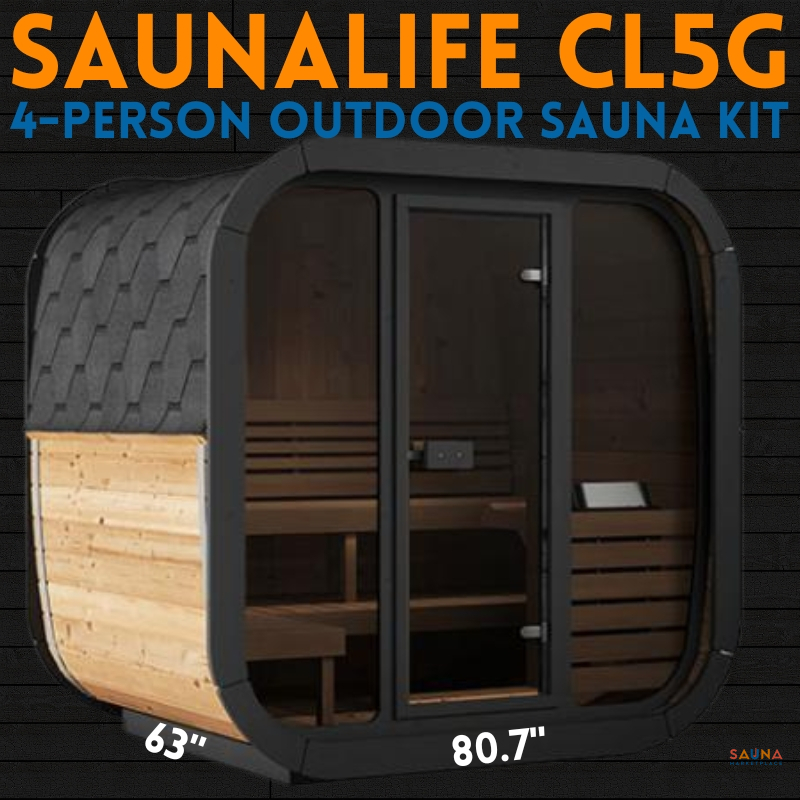
Single-layer kits are one skin of wood. The board you see inside is the same board you see outside. The SaunaLife CL5G, the Sauna Squares, and every barrel kit we recommend are built this way. Most use planks or staves drawn tight with bands, cables, or fasteners. The seal comes from tight-fitting wood, not insulation.
A single-layer outdoor sauna kit should be thermally modified. Full stop. Raw spruce and cedar expand and contract until the shell starts working itself apart. Gaps open. Heat escapes. The heater that was sized correctly on day one becomes effectively undersized, so it runs longer and harder trying to heat a room that no longer holds heat. Eventually the heater itself can fail from trying to keep up.
Thermally modified wood barely moves, so the boards stay tight and the heat stays in. It is the first thing we check on an outdoor kit, but it is not the last.
A durable outdoor kit also needs:
- A real waterproof roof or a proven rain-jacket system.
- Drip edges that move water away from the walls.
- Floor drains for bathing water, tracked-in water, and cleaning.
- Intake and exhaust vents that let the heater and bathers breathe.
- A flat, level base that drains instead of holding water under the sauna.
A barrel shape is not a roof. Miss any one of these details and the pretty launch photo will not matter five winters later.
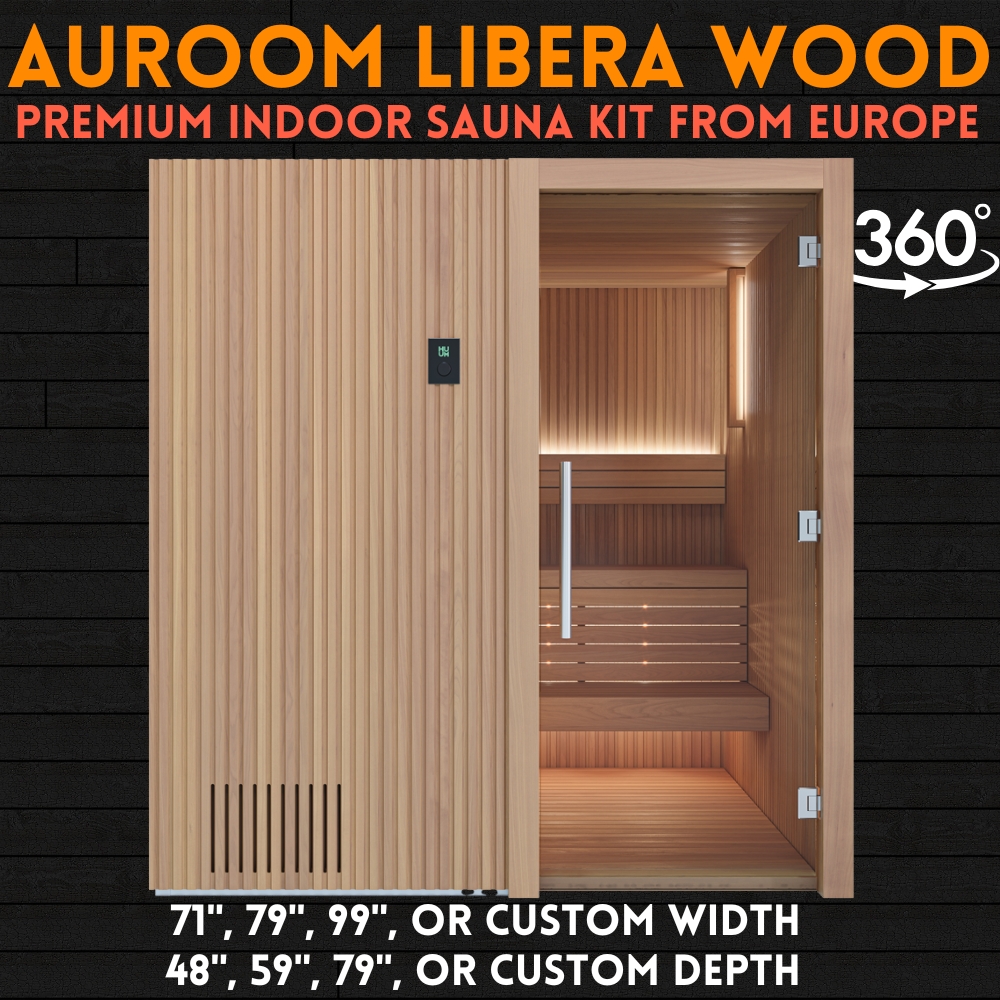
Insulated, panelized kits arrive as wall and ceiling panels made of several layers: an interior wood face, a radiant barrier, mineral wool insulation, and an exterior skin. This is how a true custom sauna is built, to Finnish sauna design standards, just delivered as ready-made panels. They hold heat better, cost more, and feel like a finished room rather than a wooden box.
Neither is “better” in the abstract. Which one you need depends almost entirely on whether the sauna goes outside or inside. That brings us to the rule most people get backward.
Where single-layer works and where insulation belongs
A well-built single-layer outdoor kit performs beautifully. The order matters: thermally modified wood, real weather protection, drainage, ventilation, then a heater sized for the room, glass, and climate. A bigger heater does not rescue a shell that is opening gaps or taking on water.
Indoors, we sell insulated, panelized kits. In a sauna built into the house, the insulated wall and ceiling assembly needs a proper vapor and radiant barrier so hot, humid air stays out of the framing. A freestanding cabin does not share the house wall cavity, but we still want an indoor kit engineered as a complete insulated system. No bigger heater fixes a bad wall assembly.
Our rule is firm: single-layer outdoor kits must use thermally modified wood and manage water correctly. Indoor kits should be insulated and panelized. We will not trade the bones of the sauna for a lower price.
Browse by the kit that fits your space
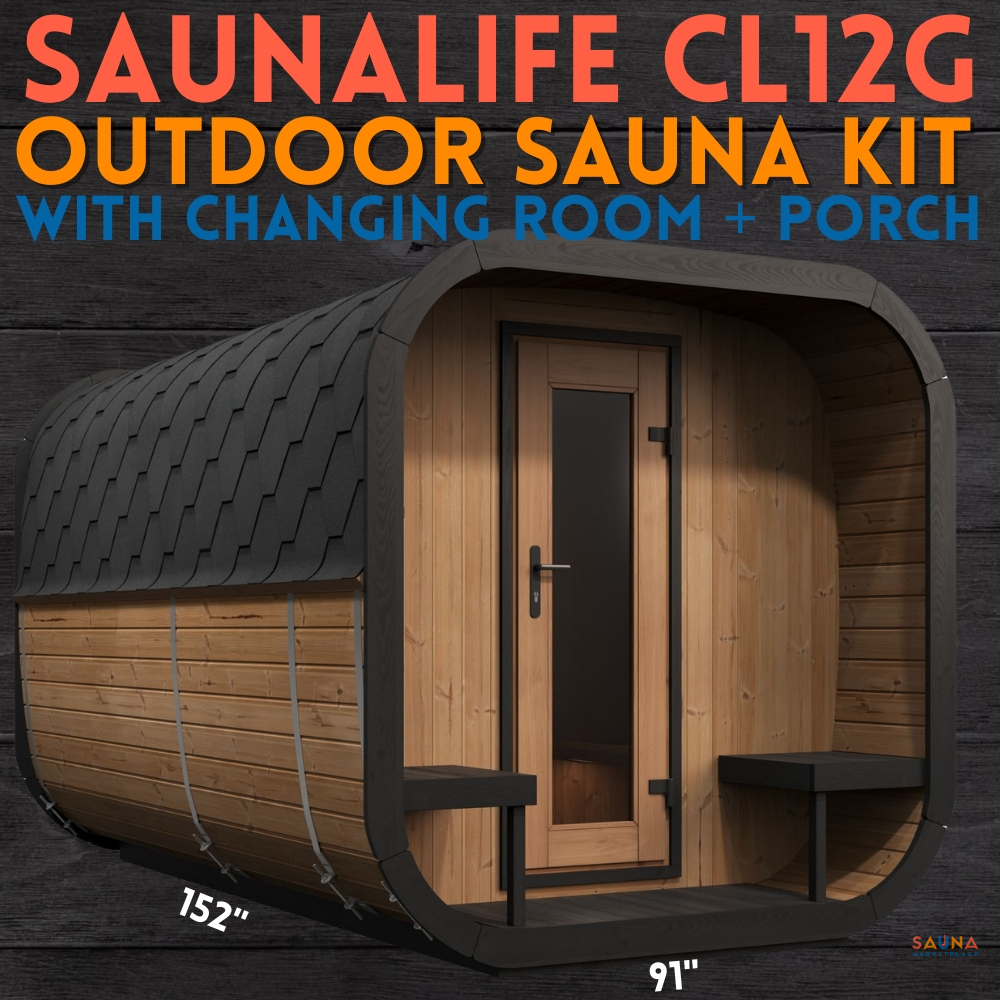
- Outdoor sauna kits: cabin and cube saunas for the backyard, 2 to 6 people, glass fronts, shingled or flat roofs.
- Barrel sauna kits: the round profile heats fast, but it still needs a shingle roof or proven rain jacket. The most affordable way outside.
- Indoor sauna kits: insulated, panelized rooms for a basement, garage, or spare bathroom. 1 to 4 people.
Cubes, barrels, and when a barrel still wins
Cubes have been quietly taking over. They give you more headroom, real seating, and a shape that looks at home next to a modern house. In our own sales they now outsell barrels close to two to one.
A barrel still wins when you want quick heat-up, a lower entry price, or simply love the look. That is reason enough. Just do not mistake the curved wall for weather protection. Buy the roof kit. If you get heavy snow, use the model’s actual snow-load guidance instead of trusting the shape alone.
Start with the SaunaLife EE6G, the SaunaLife EE8G, or the Thermory 60 Series. All three give you two bench levels. The Thermory 60 is Saunum-ready. The EE8G can also work with a Saunum configuration after the clearances and heat-shield plan are checked. Saunum pulls the hottest ceiling air down and blends it with cooler floor air, cutting the worst of the head-to-feet temperature split.

Why two bench levels matter
Heat rises and the floor stays cool, so a single low bench leaves your feet in the coldest air in the room while your head bakes. A second, upper bench lets you sit with your feet up on the lower level, out of the cold layer, with your whole body in even heat. It is the difference between a sauna that feels lukewarm from the knees down and one that feels right. If a kit only offers one bench level, know what you are giving up.
Heaters: pick for your priority
We let you choose the heater instead of forcing a bundle, because everyone wants something a little different. The common starting points:
- Hottest: HUUM. If you chase high temperatures and a hard löyly, this is the one.
- Most even heat: Saunum. It blends hot ceiling air with cooler floor air, cutting the worst of the cold-feet problem.
- Most reliable: Harvia. Decades of track record and very little to go wrong. Set it and forget it.
And if you pick on looks, we will not judge you for a second. Aesthetics matter, and the right-looking heater you love is better than the technically perfect one you do not. Browse all sauna heaters, or tell us your priority and we will narrow it down.
How to judge the company behind the kit
We hear the horror stories all the time: panels that do not line up, warped door frames, duplicate or missing parts, the wrong manual packed in the crate, benches that need to be cut in the field, and nobody in North America holding the replacement piece. That is the hidden cost of a cheaply manufactured sauna kit.
A good manufacturer can still ship a bad part. The difference is what happens next. SaunaLife, Auroom, Thermory, and the other manufacturers we trust have repeatable factories, real manuals, replacement parts, and a support chain when build day goes sideways. We have walked the factory floors in the Baltics and Scandinavia. We know what is on the pallet, and we know who answers when something is wrong.
Installation, in brief
The pattern is the same across most kits. Pour or set a flat, level, well-draining base. Stand and fasten the walls or bands, set the roof, hang the door, and place the benches. Then a licensed electrician makes the final 240V connection for the heater. Some smaller kits advertise a one-day, two-person build. A weekend is more honest for most first-time builders, and large cabins or glass fronts can take longer. We send the heater spec sheet ahead of time so your electrician shows up with the right numbers.
The kits our customers actually buy
These are the kits our customers order most often. The order below follows actual unit sales in our store, and the prices were checked on August 12, 2026.
| Kit | Type | Seats | Price | What stands out |
|---|---|---|---|---|
| SaunaLife CL5G (most ordered) | Outdoor cube | 4 | $5,990 | Glass front, Thermo-Spruce, shingled roof. |
| SaunaLife CL4G | Outdoor cube | 3 | $4,990 | The CL5G logic in a tighter footprint. |
| SaunaLife EE6G | Barrel | 4 | $5,990 | Back-wall bench and a flat floor inside the round. |
| Thermory 60 Series | Barrel | 4 to 6 | from $6,501 | Genuine Thermory wood, two levels, Saunum-ready. |
| SaunaLife CL3G | Outdoor cube | 2 | $3,990 | The least expensive way into the cube line. |
| SaunaLife EE8G | Barrel | 6 | $7,190 | Two bench levels, with Saunum fit planning available. |
| Sauna Squares by Thermory | Modern cube | 2 to 4 | from $8,811 | Flat-roof lines, Estonian thermally modified aspen. |
| Auroom Cala Glass Mini | Indoor (insulated) | 1 | $7,190 | Panelized indoor room with floor, fits a corner. |
Prices checked 2026-08-12. Thermory and Sauna Squares price by size. We confirm the current price, stock, and lead time with you before any payment.
What a sauna kit costs
- Sauna tents: around $1,000, the cheapest way to start.
- Barrel kits: roughly $4,000 to $7,500.
- Outdoor cube and cabin kits: roughly $4,000 to $9,000.
- Indoor insulated rooms: roughly $5,000 to $10,000.
Then budget for the parts that are yours: a level base, the electrical run, and freight. Kits ship freight on a pallet, and we quote the real shipping cost to your address before you pay. Affirm financing is available if you would rather spread it out.
Delivery and lead times
In-stock kits usually ship within a week or two by freight. Made-to-order cabins and configured Thermory units can run several weeks. We give you the real date before you pay, not after, and we keep in-stock saunas listed so you can see what ships now.
Sauna kit questions, answered
What is the difference between a single-layer and an insulated sauna kit?
A single-layer kit is one skin of wood, the same board inside and out. Cubes like the CL5G and every barrel kit we recommend use this construction. Outdoors, the wood must be thermally modified and protected by a real roof, drainage, and ventilation. An insulated, panelized kit adds an interior face, a radiant barrier, mineral wool, and an exterior skin. That is what we recommend indoors.
Do I really need an insulated kit indoors?
Yes. We only recommend insulated, panelized indoor kits. In a sauna built into the house, the wall and ceiling assembly needs a proper vapor and radiant barrier so hot, humid air stays out of the framing. A freestanding cabin is separate from the house wall cavity, but an insulated system still gives you predictable heat and moisture control.
Does a sauna kit include the heater?
You usually choose the heater separately, which is a good thing, because the right heater depends on what you want: hottest, most even heat, or most reliable. Each product page lists exactly what ships. Call us at (844) 565-1113 if it is not clear.
How long does it take to assemble a sauna kit?
Plan on a weekend with two capable people for a small barrel or cabin. Some manufacturers advertise one day, but first-time builders and glass-front models often take longer. Larger cabins are real construction projects. Our CL5G build video below shows a full assembly.
Do I need an electrician?
For most electric heaters, yes. A 6 kW or larger heater needs a dedicated 240V circuit. We send the spec sheet so your electrician has the numbers up front. Wood-burning kits skip this.
What foundation does a sauna kit need?
A flat, level, well-draining base: a concrete pad, pavers, or compacted gravel. The goal is to keep the bottom of the sauna off wet ground so it lasts.
Which wood should an outdoor kit be made of?
Thermally modified spruce or aspen. Full stop. Untreated wood expands and contracts until gaps and cracks open, heat escapes, and the heater has to work harder to keep up. The kit also needs a real roof, drip edges, drains, vents, and a level base that moves water away.
Kit versus custom build, which is right for me?
A kit is faster, cheaper, and predictable, and it suits most backyards. A custom build makes sense for an odd space, a specific look, or a commercial project. Tell us the space and we will give you a straight answer.
See a kit go together
Two people, hand tools, real audio. A full SaunaLife CL5G assembly, our most-ordered kit.
Not sure which kit? Tell us your space and how you want to use it. Browse outdoor kits, barrel kits, or indoor kits, or call (844) 565-1113 and a founder will help you get it right the first time.
 Prebuilt
 Sauna Brushes
 Vents
Vents